

Soundstages are businesses, not just buildings.
Carl Muhlstein has sold, leased, and underwritten some of Los Angeles' best-known studio lots and entertainment venues since the early 1990s. Muhlstein CRE advises owners, lenders, studios, and investors as consolidation, streaming economics, and new supply reshape demand for stages, theaters, and production space.
Cinerama Dome, Hollywood
Long-term lease to Sony Pictures Entertainment and Alamo Drafthouse to restore and reopen the Dome and the adjacent former ArcLight complex. Carl, with CBRE and JLL, represented the ownership.
Occidental Studios Main Lot
Los Angeles' longest continuously running studio lot: three acres, four soundstages, and about 65,000 square feet near Westlake, marketed with CBRE.
Dolby Theatre, Hollywood
Sale of the home of the Academy Awards for CalPERS, for about $50 million. Carl, with JLL, represented the seller.
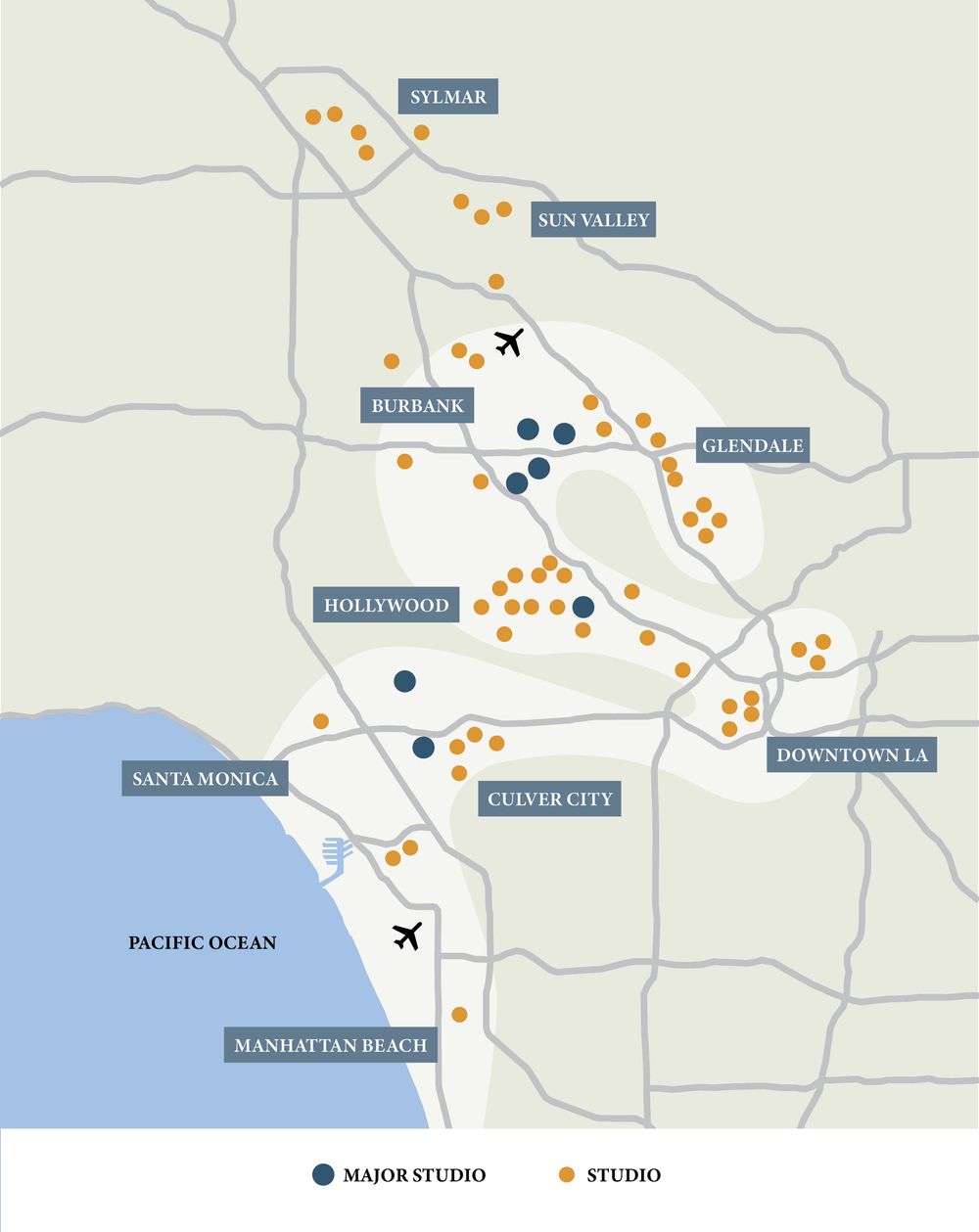
Los Angeles' soundstages run in an S-shaped band: from Sylmar and Sun Valley through Burbank and Glendale, down through Hollywood to Downtown, and west to Culver City, Santa Monica, and the South Bay.
Carl's studio work runs along the curve, from CBS Studio Center in Studio City and The Burbank Studios to 3030 Studios in Atwater Village and Columbia Square and The Lot in Hollywood.
Sales & Recapitalizations
Positioning lots, stages, and venues for the right buyer pool, from strategic users to institutional capital.
Leasing & Occupancy
Stage, office, and support-space leasing for owners, and space strategy for studios and content companies.
Underwriting & Lender Briefs
Valuing the business and the building together: stage occupancy, production demand, and the capital behind the buyer pool.
Repositioning & Alternative Use
When a lot or venue is underused: densification, conversion, or a new operator.
Consolidation Strategy
Planning for mergers, relocations, and lot rationalization as studios combine.
Studio Market Intelligence
A proprietary database of Southern California studio assets, covering ownership, stages, pipeline, and transactions, cross-checked against FilmLA production data.
Consolidation is already changing how studio space gets used. The bigger test for landlords may come in about five years, if new stages open into a weaker production market.
Production cutbacks reach well past the lot: by the industry studies Carl cites, each studio job supports about eight others, from drivers and makeup artists to lighting crews and caterers.
Studio economics have reset. A new facility no longer guarantees tenants, and productions favor landlords with a stake in them.
Falling studio-lot values are sending owners to the Assessor with Prop 8 appeals, a hit to County revenue on top of lost production jobs.
Paraphrased from Carl's published comments; follow each link for the original.
Owning, financing, or occupying studio space?Or email Carl directly at carl@muhlsteincre.com
Start a conversation